


Student Activities
Middle School Debaters Compete in Championship Tournament
By Jennifer Posner, CTMSDL
The CT Middle School Debate League (CTMSDL) held its 2023-24 season championship tournament on Saturday, April 6, 2024, at Bethel Middle School. To qualify, debaters had to have scored among the top 15 speakers and/or teams during the regular season. The prep ahead motion was: This House

Middle School Students Debate Merits of Social Media
By Jennifer Posner, CTMSDL
On Saturday, February 10, 2024, the CTMSDL held its last regular tournament of the season at Timothy Edwards Middle School in South Windsor. Despite morning traffic and an afternoon software crash, 260 debaters from 16 schools combined into 52 Novice teams and 42 Open Division teams to
Middle School Students Debate Merits of Age Limits for Elected Office
By Jennifer Posner, CTMSDL
On December 16, 2023, the CT Middle School Debate League (CTMSDL) held a tournament at Smith Middle School in Glastonbury. Three hundred eight debaters from 19 schools combined into 74 Novice teams and 35 Open Level teams to debate the motion: This House would set maximum age

Middle School Students Debate Merits of School Uniforms
By Jennifer Posner, CT Middle School Debate League (CTMSDL)
On November 4, 2023, the CTMSDL held a Novice Scrimmage and Open Level Tournament at Seymour Middle School. Two hundred forty-one debaters from fourteen schools combined into sixty Novice teams and twenty-six Open Level teams to debate the motion:
This House supports student

Highlights of Men of Color in Leadership Conference
Students and advisors from across CT gathered at Berlin High School on October 24, 2023, for the Men of Color in Leadership Conference. Watch the highlights here!

CANHS Annual Conference - An Exciting Day of Leadership & Learning
The Connecticut Association of National Honor Societies (CANHS) held its annual leadership conference on April 27. This year's theme was "Unleashing the Essence of Leadership," with keynote speaker Jonathan Fanning. Here's a glimpse of all of the exciting leadership-building activities that took place!
CTMSDL Hosts Championship Tournament
By Jennifer Posner, CTMSDL
On Saturday, April 1, 2023, the Connecticut Middle School Debate League (CTMSDL) held its third annual championship tournament. Sixty-six debaters from the following eleven schools qualified for the championship by placing 1-10 at a CTMSDL tournament this season:
Stamford Middle Schools coached by AITE
Amity Middle School

Meet the 2023 Heart of the Arts Award Winner
CAS is pleased to announce that Riley Cook-Jimenez, a senior at Bunnell High School in Stratford, has been selected as the winner of the 2023 Heart of the Arts Award! Learn more about this extraordinary young woman and the role of music in her life.
CTMSDL Hosts Winter Tournament
By Jennifer Posner, CTMSDL
On February 11, 2023, 223 debaters from 17 Middle Schools combined into 37 Novice and 46 Open Level teams to debate the motion: This House would give low-income parents vouchers to send their children to private schools. Proposition prevailed in 50.8% of the rounds.
The Irving A. Robbins
CTMSDL Hosts December Tournament
By Jennifer Posner, CTMSDL
On December 17, 2022, two hundred twenty-two debaters from eigtheen middle schools combined into forty-one Novice and thirty-nine Open Level teams to debate the motion:
This House believes that state lotteries do more harm than good.
Results can be found on Tabroom.com.
As always, coaches and debaters with Tabroom
Middle School Students Debate Merits of Zoos
By Jennifer Posner, CTMSDL
On October 22, 2022, 172 debaters from twelve middle schools, combined into thirty Novice teams and thirty Open Level teams to debate the motion:
This House believes that zoos do more harm than good.
This was a scrimmage for Novices and a tournament for Open Level.
Full Open Level results

Fourteen Schools Awarded CAS-CIAC Flanagan Endowment Grants
Fourteen Connecticut schools have been selected by the Connecticut Association of Schools as the recipients of the 2022 CAS-CIAC Flanagan Endowment Grants. Through the generosity of corporate partners, the CAS-CIAC Endowment and Flanagan Grant Program was able to provide over $24,000 in grants this year to new or existing initiatives
2022 Challenge to Educational Citizenship Virtual Awards Ceremony
On June 9, 2022, students, advisors and administrators from around the state gathered via Zoom for the presentation of the 2022 Challenge to Educational Citizenship Awards. These awards celebrate student-organized activities that demonstrate good citizenship, civic awareness and service to others. Representatives from each of this year’s winning schools were

Women Leaders Share Their Stories
If you missed last week's virtual Women in Leadership Conference, a video recording is now available. This year's conference featured two panels of distinguished women leaders in the fields of education, law and law enforcement, esports, entrepreneurship and media. The program also included student leaders from three Connecticut high schools.
CTMSDL Hosts Second Annual Championship
By Jennifer Posner, CTMSDL
On Saturday, May 7, the Connecticut Middle School Debate League (CTMSDL) hosted its second annual championship tournament. Sixty-four (64) debaters from the following schools qualified for the championship by placing 1-10 at a CTMSDL tournament this season:
• Amity Middle School
• Eastern Middle School
• Irving A. Robbins

Gary McGuey Inspires Student-Leaders at CANHS Conference
On April 21, 2022, the annual Connecticut Association of National Honor Societies (CANHS) hosted its annual spring conference via Zoom. Keynote speaker Gary McGuey, former educator, athletic director and author who spent the past 20 years visiting schools throughout North America and working with stakeholders on topics related to leadership,
CTMSDL Hosts Successful Spring Tournament
By Jennifer Posner, CTMSDL
On Saturday, April 2, 2022, the CT Middle School Debate League (CTMSDL), sponsored by the Greenwich Branch of the English Speaking Union, held its third regular tournament of the 2021-22 season. 233 middle school debaters from 20 schools combined into 25 Novice and 59 Open teams and
CTMSDL Hosts Successful Winter Tournament
By Jennifer Posner, CTMSDL
On Saturday, February 12, 2022, two hundred twenty-seven middle school debaters from the following seventeen schools combined into twenty-four Novice and forty-five Open teams and debated the motion: This House regrets the rise of space tourism.
Stamford schools coached by AITE
Amity Orange & Bethany
Bethel
Hamden
CTMSDL Hosts Successful First Tournament
By Jennifer Posner, CTMSDL
On Saturday, December 18, 2021, the CT Middle School Debate League hosted its first tournament of the 2020-21 year. Two hundred seventy-seven debaters from 19 schools combined into 96 teams and debated the motion:
This House would boycott the 2022 Beijing Winter Olympics.Proposition teams prevailed in 58% of the

Catch the Latest CASC News!
The September 2021 issue of the CASC Advisors Planner, the official newsletter of the CT Association of Student Councils, has just been released. Be sure to check out this month’s edition to catch up on recent CASC goings-on, find out about future initiatives and opportunities, and hear about some of
Student Equity Board Produces Video on Discrimination
Eleven Connecticut high school students, all members of the CAS-CIAC Student Equity Advisory Board, recently participated in a video project on prejudice and discrimination. In this 12-minute video, the students speak openly about their experiences with racial, class, gender and religious bias. Click here to watch this candid and powerful

Conference Celebrates Diversity, Equity and Inclusion
On May 25, the CAS-CIAC Student Equity Advisory Board and Connecticut Unified Sports® hosted “Unity Starts with U!,” a half-day conference celebrating diversity, equity and inclusion. This virtual event for high school students featured a keynote address from the ever-popular A'ric Jackson. Watch it now!

Student Equity Board Presents Findings
Earlier this month, members of the Student Equity Advisory Board (SEAB) presented research findings and recommendations on a number of critical topics, including gender bias and bias toward LGBTQ students; religious discrimination; and the shortage of minorities in teaching, coaching and administration. The presentation was the culmination of over nine
Results of Spring Middle School Debate Tournament
A message from CT Middle School Debate League President, Jennifer Posner...
On April 24, 2021, 263 debaters from 23 middle schools combined into 94 teams to debate the motion: This House, as the US federal and state governments, would not require standardized testing for the 2020-21 school year.
Proposition prevailed
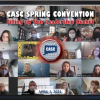
CASC Spring Convention - Filling up Your Leadership Bucket
The 2021 CT Association of Student Councils (CASC) Spring Convention, “Filling up Your Leadership Bucket,” was held virtually on April 1. High school student leaders joined peers from across the state for a morning of inspiration and empowerment.

Students Speak Openly About Prejudice and Discrimination
In 2020, CAS-CIAC created the Student Equity Advisory Board (SEAB) to bring awareness to inequities in Connecticut and collaborate on ways to make schools more inclusive for all students. The SEAB consists of 40 students, up to four from each athletic league, and those members develop and implement ideas and
All About Credit - Financial Literacy for Students
On April 6, 2021, CAS hosted the second of two financial literacy workshops for students. "All About Credit," featuring Kathleen Titsworth from the Connecticut Department of Banking, is aimed at helping teens understand the importance of establishing good credit. Click below to watch the recording of this presentation. And be sure

Personal Banking and Online Safety - Financial Literacy for Students
On March 9, 2021, CAS hosted the first of two financial literacy workshops for students. "Personal Banking and Online Safety" features Kathleen Titsworth from the Connecticut Department of Banking. In this session, Kathleen discusses what to look for to ensure online safety; reviews different types of bank accounts; and talks
2021 Elementary Leadership Conference
The Annual Elementary Leadership Conference, held on March 25, 2021, was attended by over 1000 students. Hatton Elementary School (Southington) Principal Bob Garry hosted this half-day virtual event which focused on leadership skills, interactive learning, teamwork, equity, and decision-making. If you missed the "live" event, be sure to catch the

2021 Middle Level Leadership Conference
The Annual Middle Level Leadership Conference, held on March 23, 2021, was attended by over 1000 students. Director of Student Activities Cherese Miller-Odukwe hosted this half-day virtual event which focused on leadership skills, interactive learning, teamwork, equity, and decision-making. If you missed the "live" event, be sure to catch the
CTMSDL Hosts Successful Winter Tournament
By Jennifer Posner, CTMSDL
On Saturday, February 27, 2021, 285 debaters from 20 middle schools, combined into 100 teams to debate the motion: This House would ban law enforcement from performing genetic genealogy searches in consumer databases. Proposition prevailed in 44% of the day’s debates.
The Dalton School’s team of Feder, Massiah

Middle School Debate Holds First Tournament of 2020-21 Season
A message from CT Middle School Debate League President, Jennifer Posner...
On Saturday, December 19, 2020, the Connecticut Middle School Debate League held its first competitive tournament of the season, online. Three hundred debaters from nineteen schools combined into 106 teams to debate the motion: This House believes that televised Presidential
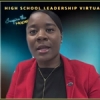
Winter 2020 Virtual High School Leadership Conference
Student leaders from across Connecticut came together for the CAS-CIAC Virtual High School Leadership Conference. Dr. Phil Campbell, Amanda Pickett, Kendrick Moore and Ryan Martin were the featured speakers.
Middle School Debate League Kicks off 2020-21 Season!
A message from CT Middle School Debate League President, Jennifer Posner...
In our first event of the 2020-21 season, a scrimmage, 187 debaters from 15 schools (see graphic on right) combined into 65 teams to debate the motion: This House, as Facebook, would ban all political advertising.
Forty-six volunteers judged, including many
Middle School Debate League Goes Virtual in 2020-21!
A message from CTMSDL President, Jen Posner...
Welcome to the CT Middle School Debate League’s 2020-2021 season…a virtual one! We know you have a lot on your back to school plates this year (to say the least) but we hope that getting back to debating will bring you and your
2020 Challenge to Educational Citizenship Virtual Awards Ceremony
On June 9, students, advisors and administrators from around the state gathered via Zoom for the presentation of the 2020 Challenge to Educational Citizenship Awards. These awards celebrate student-organized activities that demonstrate good citizenship, civic awareness and service to others. Representatives from each of this year’s winning schools were in
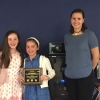
Ten Schools Receive Citizenship Awards
On June 5th, students, advisors and principals from around the state filled the CAS conference center for the presentation of the 2019 Challenge to Educational Citizenship Awards. These awards celebrate student-organized activities that demonstrate good citizenship, civic awareness and service to others. Representatives from each of this year’s winning schools
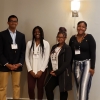
CANHS Spring Conference a Rousing Success!
The Connecticut Association of Schools National Honor Societies (CANHS) would like to thank all the participants and contributors who helped to make the 2019 CANHS conference a successful event. The conference, which took place at the Sheraton Hartford South Hotel on May 30, 2019, featured Jonathan Winer (CREC Schools) who
7th Annual Robotics State Championship
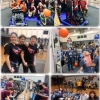
Capping a busy season for Connecticut’s high school FIRST Robotics Competition (FRC) teams, the Connecticut Association of Schools, in partnership with NE FIRST, hosted the seventh annual FRC High School State Championship on Saturday, May 11th, at the Connecticut State Armory in Hartford, CT. The competition provided FRC teams from
Middle School Debate Tournament Sets New Participation Record
By Jennifer Posner, CTMSDL
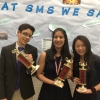
The CT Middle School Debate League held its largest tournament to date on Saturday, December 1, 2018, at Seymour Middle School! Two hundred seventy-two debaters from twenty-two schools combined into ninety-six teams to debate the motion: This House would allow incarcerated felons to vote.
Proposition won 56%
Six Schools Receive Challenge to Educational Citizenship Awards
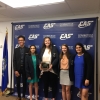
Pictured above (clockwise from top left): Representatives from Sage Park MS; representatives from Madison MS; representatives from Naugatuck HS; representatives from Naugatuck HS; representatives from Sage Park MS; representatives from Bristol Eastern HS; representatives from Notre Dame HS; representatives from Sage Park MS; and, representatives from John Wallace Middle
CTMSDL Has Strong Showing in Regional Championship
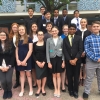
Twenty-one students from the CT Middle School Debate League (CTMSDL) joined peers from New York, New Jersey, Connecticut, Virginia, Maryland and Colorado to compete in the English in Action Middle School Debate Championship Tournament on May 5 in New York City.
The CTMSDL sent one team of comprised of three debaters each from
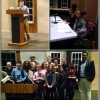
Middle School Debate Tournament Sets New Participation Record
By Jennifer Posner, CTMSDL
The CT Middle School Debate League held its largest tournament to date on Saturday, April 21, at Eastern Middle School in Greenwich! Two hundred twenty-four debaters from twenty-three schools combined into eighty-one teams to debate the motion: This House believes that Artificial Intelligence will do more good
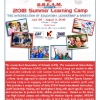
CAS-CIAC Pilots Summer Learning Camp
CAS-CIAC is excited to partner with the McMikle Group and the Windsor Public Schools to offer an innovative summer learning camp that combines leadership, athletics and academic enrichment.
The D.R.E.A.M. Sports Summer Learning Camp is a six-week youth camp that is open to any Connecticut student in first through tenth grade.
Detailed

New Britain Students Hone Leadership Skills at CAS Conference
On January 11, six student leaders from HALS, DiLoreto and Pulaski Middle Schools attended the CAS Middle Level Leadership Conference held at Trinity College in Hartford. On January 11, six student leaders from HALS, DiLoreto and Pulaski Middle Schools attended the CAS Middle Level Leadership Conference held at Trinity College in
Middle School Debate Going Strong!
By Jennifer Posner, CTMSDL
On Saturday, January 27, 2018, one hundred sixty-two middle school debaters from sixteen schools combined into fifty-nine teams to debate the motion: This House would eliminate executive pardons and commutations.
Proposition prevailed in 48% of the debates. The team of Halle Hunt, Ava Prevey, and Nathaniel Valdivieso

New Initiative Aims to Build Young Leaders
This fall, the student activities division introduced a new leadership initiative at the second and third grade level called “Little Leaders.” Thus far, two “Little Leaders” conferences have been piloted with rave reviews. The first conference took place on October 5th with Joel School (Clinton) joining Totoket Valley and Jerome
Middle School Debate Tournament Sets New Participation Record
By Jennifer Posner, CTMSDL
On Saturday, December 2, 2017, a record 218 middle school debaters from 20 schools combined into 78 teams to debate the motion: This House would institute year-round schooling.
Proposition prevailed in 62% of the 117 debates. The team of Halle Hunt, Ava Prevey, and Nathaniel Valdivieso from
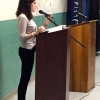
Middle School Debate League Off to a Great Start!
By Jennifer Posner, CTMSDL
The Connecticut Middle School Debate League (CTMSDL) kicked off the 2017-18 season with a scrimmage at Bethel Middle School on October 21st. One hundred seventy fifth through eighth graders from fourteen schools did a fabulous job debating both sides of the motion:
This House believes that National Service
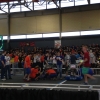
Fifth Annual High School Robotics State Championship
Capping a busy season for Connecticut’s high school FIRST Robotics Competition (FRC) teams, the Connecticut Association of Schools, in partnership with NE FIRST, hosted the fifth annual FRC High School State Championship on Saturday, May 13th, at Guilford High School.
The championship provided FRC teams from the state’s high schools an
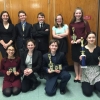
Middle Level Debate Ends Year with a Bang!
By Jennifer Posner, CTMSDL
On Saturday, April 22, 2017, the CT Middle School Debate League (CTMSDL) held its final tournament of the year at Eastern Middle School in Greenwich, setting a new record for participation! Two hundred eleven students from twenty schools debated the motion:
This House would colonize Mars.
The proposition prevailed in 47% of

Windsor Middle School Opens Leadership Program To All Students
THE COURANT | FEEBRUARY 3, 2017 6:00 AM | WINDSOR
By Steven Goode
When officials at Sage Park Middle School started a youth leadership program for black male students last year they were hoping to boost the self-esteem and build confidence to empower young men of color.
"As we worked through the program
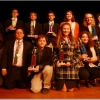
January Middle Level Debate Tournament Has Repeat Winners
Team and Speaker award winners beam with pride following their victories!
The Connecticut Middle School Debate League held another successful tournament on Saturday, January 28, 2017. One hundred sixty-six students from seventeen schools traveled to Middlebrook School in Wilton to debate the motion:
This House would eliminate life without the possibility of
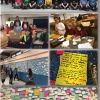
"Look for the Good" Going Strong in CT!
Check out these fun photos from recent "Look for the Good" activities in CT!
Click here for more information on the Look for the Good Project.
NASSP Announces Awards Opportunities for State Honor Societies
The National Association of Secondary School Principals (NASSP), parent organization of the National Honor Society and National Junior Honor Society, has has announced its 2016-17 awards opportunities for NHS and NJHS chapters. These awards - and scholarship opportunities - provide national recognition to outstanding Honor Society members, chapters, advisers, and
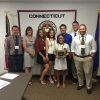
Six Schools Receive Challenge to Educational Citizenship Awards
On June 2nd, the CT State Department of Education presented the 2016 Challenge to Educational Citizenship Awards to six Connecticut schools. These awards celebrate student-organized activities that involve service to the school, to the community and/or to those in need.
The Challenge to Educational Citizenship (CEC) Award Program began in 1995-96

Middle School Debate Season Closes with Record Turnout
By Jennifer Posner, CTMSDL
On Saturday, April 30, 2016, we wrapped up the CT Middle School Debate League’s 2015-16 season with a tournament at Smith Middle School in Glastonbury. Setting a new record for participation, one hundred seventy three students from eighteen schools debated the motion:
This House would provide a

"Salam Neighbor" Gets Students Thinking, Talking and Acting
On March 10th, while many were deep into March Madness, 200 students, teachers, administrators and CASC Student Advisory Board members turned their attention towards Syria and got a glimpse into the experience of living in a refugee camp. They attended a screening of the film "Salam Neighbor" and a discussion
Middle School Debate Tournament Draws Record Numbers
By Jennifer Posner, CTMSDL
On Saturday, November 21st, one hundred and fifty nine debaters from fifteen Connecticut schools debated the motion:
This House would establish a program to revive extinct species and re-introduce them into the environment.
Earning spots in the final round after three rounds of debate were two Greater Hartford Academy
High School Debate Tournaments Draw Near Record Number
Five-hundred two debaters -- our second highest total ever! -- from 42 schools attended our November tournaments at Amity High School, Housatonic Valley Regional High School and New Canaan High School. Thanks to coaches Cara McConnell, John Lizzi and Kristine Goldhawk for their hospitality.
The topic was:
Resolved: The US should approve
Middle School Debate League Off to a Great Start!
By Jennifer Posner, CTMSDL
The Connecticut Middle School Debate League’s 2015-16 season got off to a great start on October 17th. One hundred and three debaters from thirteen schools scrimmaged at Luis Munoz Marin School in Bridgeport. They did a fabulous job debating both sides of the motion: This

The 2015-16 Middle School Debate Season is Underway!
The CT Student Activities Conference, in partnership with the very successful high school debate league, is pleased to invite any interested middle school students to participate in the CT Middle School Debate League's (CTMSDL) second year of competition!
Middle schoolers are natural debaters. They love to argue and have

Olympian Rod Dixon Talks About Getting Kids Running
Sarah and Dimity welcome two guests to talk about getting kids active and healthy. First up is Olympian Rod Dixon, a father (and grandfather!) runner who founded Kid’s Marathon Foundation, an in-school running and nutrition program that gets kids moving. In his delightful Kiwi accent, Rod shares stories about his

Marathon Man Rod Dixon Brings Inspiration to Harwinton Running Club
By John Nestor | The Register Citizen
POSTED: 06/05/15, 4:43 PM EDT
HARWINTON -- Students in the Harwinton Consolidated School Running Club are in the home stretch toward reaching an impressive goal. If they were looking for a little extra motivation to accomplish it, they got some this week.
Olympic bronze medalist

CT KiDS: Let’s Get Moving in 2015!
Ever since First Lady Michelle Obama’s “Let’s Move Campaign” was announced, children’s health, and childhood obesity in particular, has taken center stage. And for good reason. We’ve all heard the statistics: one in three children are either overweight or obese, with even higher rates among African Americans, Hispanics and Native
Manchester High Students Gain Confidence At Leadership Conference
By Michael Walsh
APRIL 7, 2015, 10:34 PM
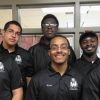
Members of the Manchester High School Young Men's Leadership Group attended a leadership conference at Trinity College in Hartford on March 16. The students not only attended the Connecticut Student Leadership Conference for Young Men of Color, they also worked closely with the Connecticut
CAS-CIAC Battle of the Fans Finalists Announced
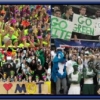
Nine Connecticut high schools submitted entries in the inaugural CAS-CIAC Battle of the Fans competition, producing short videos showcasing the spirit and sportsmanship of their student cheering sections. The submissions have been reviewed and three finalists have been named. Check out the top three videos and stay tuned to learn
Inaugural Middle School Debate Tournament Draws Good Numbers
The first-ever middle school debate tournament was held on Saturday, January 31, 2015, at Wamogo Middle School in Litchfield. Ten schools and over 100 debaters competed in the inaugural event. The Connecticut Debate Association (CDA) extends its heartfelt thanks to Coach Scott Brady for hosting the tournament and to the

National Honor Societies - A Call to Action
The Connecticut Association of National Honor Societies (CANHS), sponsored by CAS, has launched a state-wide fundraising initiative to support the Connecticut Veterans Home located in Rocky Hill, CT. Each member NHS and NJHS chapter is asked to participate. The goal is to raise a minimum of $5000, collectively, which

CTHSS Student Congress Members Participate in Leadership Training
On October 16, 2014, at A.I. Prince Technical High School, the CTHSS’ State Student Congress convened under the direction of CAS (Connecticut Association of Schools) to participate in a workshop, “Leadership in Action.” The activities focused on positive approaches to empowering student leaders to make a difference in their

Plainfield's athletes are setting the right example for everyone
By Mike DiMauro
Publication: The Day
Published October 02. 2014 4:00AM Updated October 02. 2014 8:43AM
Their names are Stevie Jankowski, Liam Jacobs, Jordan Pollard, Isaiah Fort, Reese Griffin, Kade Amster, Julie Jordan, Abby Burdick, Cody Alday, Tessa Marandola, Alyssa McKay and Andre Bergeron.
They are the voices of Plainfield High School.
They
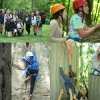
CASC Student Board Wilderness Retreat: August 15-17, 2014
The CASC board puts leadership and teamwork to the test in the wilderness
Members of the Connecticut Association of Student Councils Board immersed themselves in a teambuilding, leadership and personal challenge course at Great Hollow Wilderness School. Board members spent 3 days accomplishing group initiatives, scaling rock faces and exploring
Second Annual High School Robotics State Championship
Featured in the video clip above, which showcases the third game of the fourth quarter-final match-up, are Team 2067 - Apple Pi, Team 155 - Techno Nuts and Team 1699 - RoboCats (Red Alliance) vs. Team 1071 - Team MAX, Team 3525 - Nuts and Bolts of Fury, and Team 228

Rod Dixon, Mayor Neil O'Leary Kick-off KiDSMARATHON in Waterbury
Rod Dixon, Mayor Neil O'Leary Help Launch Kid's Marathon In Waterbury
Published by the Waterbury Observer, 03/28/2014 - 08:15 AM
Written by John Murray
Long-distance running legend, Rod Dixon, of New Zealand, was back in Waterbury Thursday morning to help kick-off the second year of his KiDSMARATHON running program in the city. Dixon won
Greenwich and Ridgefield Win Debate Championships
One hundred seventy four debaters from twenty-nine schools competed in this year's State Finals at Wilton High School. Only debaters who had won a trophy or had gone undefeated in two or more tournaments were eligible to compete, fewer than one in three of those who participated during the year.
Thanks

Results of March Debate Tournaments
Four hundred twenty-eight debaters from thirty-eight schools attended the March 1st Connecticut Debate Association tournaments at Darien, Guilford and Pomperaug High Schools. Thanks to coaches Dennis Cummings, Gianna D'Ambrusca and Margaret Hartshorn for their hospitality.
The topic was:
Resolved: Rich countries should compensate poor countries adversely affected by climate change.
The final
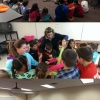
CAS Elementary Student Leadership Conferences Surpass Expectations!
By Dave Maloney, CAS Assistant Executive Director
Imagine this...
The time is 9:30 and a large group of elementary school children is entering your breakout session at the annual leadership conference. You can hear and genuinely feel their energy! But, you are a first-time presenter and a zillion nervous thoughts stream through

Results of January Debate Tournaments
Thirty-five schools and 342 debaters participated in the Connecticut Debate Association's three January tournaments held in Stamford, Fairfield and Ridgefield on January 11th. All in all, this was a slow weekend compared to recent CDA activity, due largely to mid-terms and colds. Thanks to coaches Ian Lear-Nickum, Mick McGarry and
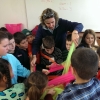
Sacred Heart Hosts First of Four Elementary Leadership Conferences
One hundred ninety six students from twenty elementary schools participated in the first of four all-day leadership conferences yesterday. Students traveled to Sacred Heart University in Fairfield to participate in hands-on activities designed to strengthen their communication, problem solving, decision making and productive thinking skills. As can be gleaned from
November Debate Tournaments Break Another Record
The November Connecticut Debate Association (CDA) tournaments broke all attendance records when 518 debaters from 37 schools came to its tournaments at Amity High School and New Canaan High School.
The topic was:
Resolved: The United States should imprison only those who commit violent crimes.
The final round at Amity was

CYL Sponsors Hands Hallway to Stop Bullying
Members of the Center for Youth Leadership (CYL) at Brien McMahon High School closed October as National Bullying Awareness Month with one of their popular hallway demonstrations.
Imagine turning the corner of a hallway and walking into more than 100 students with their arms outstretched. You are kind of thrown a
CSAC is charged by the constitution of CAS with the responsibility of regulating all interschool activities of a NON-Athletic nature where schools in more than two districts are involved.
“The CSAC Board of Control shall consist of one representative from each of the three high school classifications, two representatives each from the middle schools and the elementary schools and five members-at-large. Two of the five at-large members may be assistant principals. A principal shall serve as Chairperson.” (Article VI, CAS Constitution)
CSAC meets periodically to review and act upon applications for new or renewal activities submitted by schools and outside organizations seeking CSAC sanction. A majority vote decides approval, disapproval or no jurisdiction. CSAC posts a listing of approved activities on the CAS-CIAC website.
Art contests, research projects, essay contests, community parades, marching band contests, quiz bowls, video projects, choir contests, commercial contest that benefit schools with capitol improvement projects, and college fairs are just a few examples of project requests that come before CSAC.
All member schools within CAS come under the jurisdiction of CSAC. Through the annual act of applying for membership in CAS, member schools voluntarily agree to abide by all of the rules and regulations which govern the association’s members. Member schools, therefore, are required to comply with the rulings of CSAC on activities within its jurisdiction.
Sponsors of activities must be established and recognized organizations, institutions, or associations and must be approved by CSAC. Sponsors must submit an online application to CSAC at least 60 days before the proposed date of the activity. In order to be placed on the approved list for the ensuing year, sponsors should submit applications by June 1.
| National Associations |
| CASC Handbook |
| Awards and Recognition |
| Fundraising and Grant Resources |
| Games, Initiatives and Teambuilding Activities |
| Service Projects and Idea Swap |
| Do the Math! – a video on the vital role of extra-curricular activities in student success |
| Unity Starts with U! – A Celebration of Diversity, Equity & Inclusion |
| 2020 Virtual High School Leadership Conference |
- The activity must be educationally sound, worthwhile and stimulating.
- The activity must not place undue burdens or obligations on students, their families, teachers or schools.
- The activity shall not be more than minimally commercial in its presentation or promotion, shall not be sectarian, and shall not promote or exploit issues controversial in nature or whose advocacy would be inappropriate for students.
- The activity must not exclude any student because of race, handicap, color, creed or gender except where such activities have been developed expressly to compensate for lack of opportunity for members of such groups.
- The activity must be well planned and organized and must provide for the adequate supervision and welfare of participating students at all times.
- Essay contests, which will be considered on their merits, are limited to those which promote good writing as process, which are properly supervised by educational agencies, and which do not interfere with the sound educational practices of a school. Essay contests approved by the NASSP or sponsored by the Connecticut State Department of Education and by professional educational organizations will be approved. Essay contests judged by the Board to be commercial in nature will be disapproved.
- Activities should be scheduled on non-school time. If scheduled during school time, every effort must be made to avoid excessive loss of school time. The loss of more than one school day will be considered excessive. Rare exceptions will be made if the activity is subject- related and provides a learning experience not usually available in the traditional school curriculum.
- Adequate and responsible adult supervision approved by the school administration must be provided for all activities.
- Reasonable registration or entry fees may be assessed, subject to the approval of the CSAC.
- A MEMBER SCHOOL MAY NOT PARTICIPATE IN ANY INTERSCHOLASTIC ACTIVITY WHICH THE CSAC HAS RULED “NOT APPROVED.”
- Student activities will not be approved for Sunday under normal circumstances.
- School groups may participate in community-sponsored parades at any time at the discretion of the local school administration.
- In the case of out-of-state activities approved by a local school system, and upon application to CSAC, approval will be given when schools are invited to participate because of merit/excellence of an outstanding individual/group of students. Any unusual/special circumstances not covered by the above will be reviewed by the CSAC.
- It is the responsibility of the principals of member schools to determine the status of interscholastic activities. When in doubt, the principal should contact the Board chair or CAS for clarification.
Requests for application for the approval of an activity or any questions concerning the status of an activity or other matters over which the CSAC has jurisdiction may be addressed by phone or letter to the CAS central office liaison, Cherese Miller, 30 Realty Drive, Cheshire, CT 06410.(203) 250-1111 Fax:(203) 250-1345.
- Application for placement on list of approved contests and activities (for all student activities EXCEPT cheerleading)
- Renewal application for placement on list of approved contests and activities (for all student activities EXCEPT cheerleading)
- Cheerleading competition application for approval
- Dance competition application for approval